Returning to GNOME.Asia: My Experience as a Speaker in Malaysia
GNOME.Asia Summit 2026 · Kuala Terengganu, Malaysia · 31 October – 1 November 2026
Wan Leung Wong
I had the pleasure of attending GNOME.Asia Summit 2026 in Kuala Terengganu, Malaysia, as a speaker, with travel sponsorship support from the GNOME Foundation.
Having been involved in Hong Kong's open-source community since 2006, including helping organise GNOME.Asia Summit 2012 in Hong Kong, returning to this conference was particularly meaningful.
This year's event offered an opportunity to reconnect with the GNOME community, exchange experiences with contributors from different countries, and discuss how open-source software can better serve local needs.
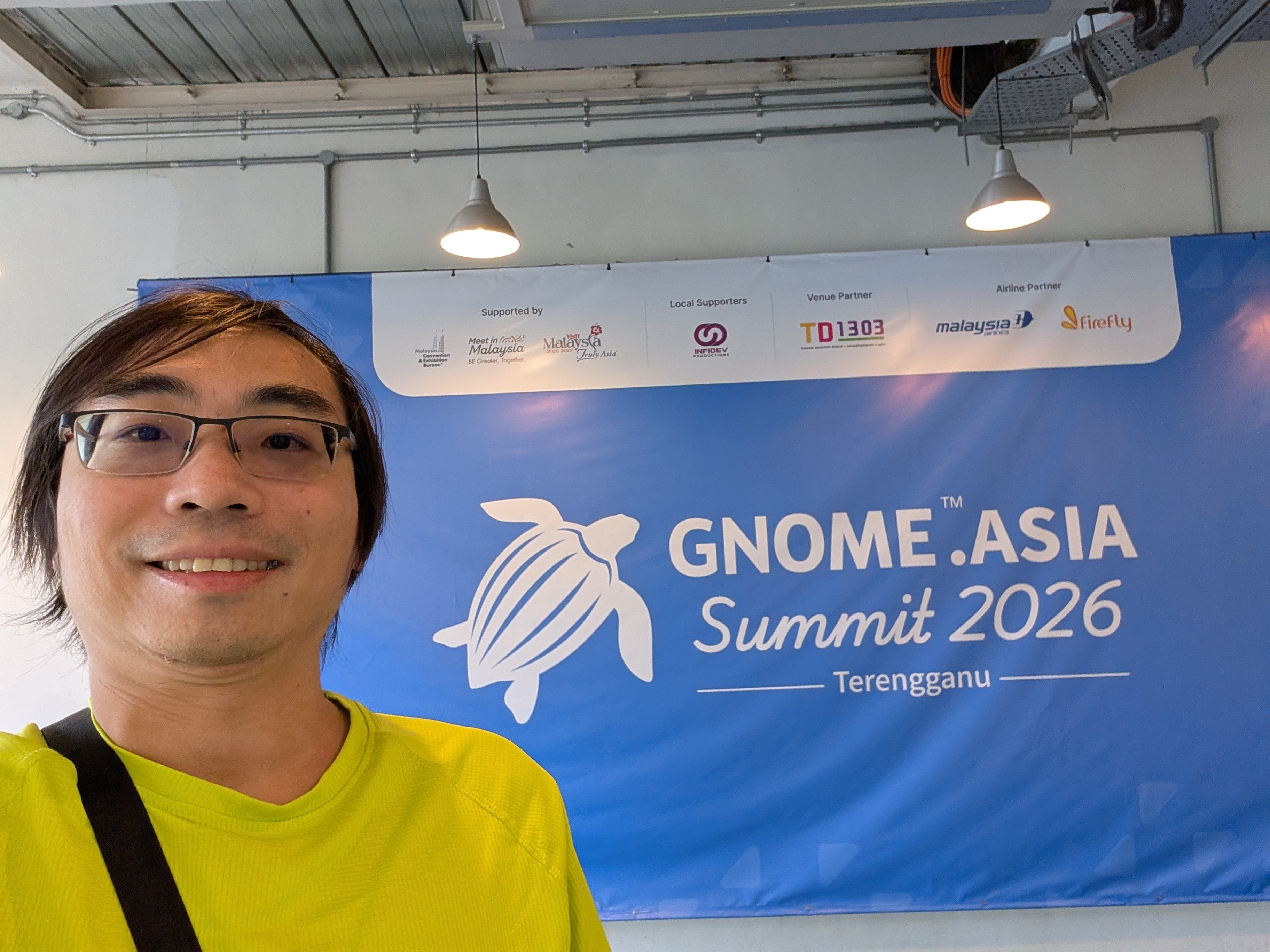
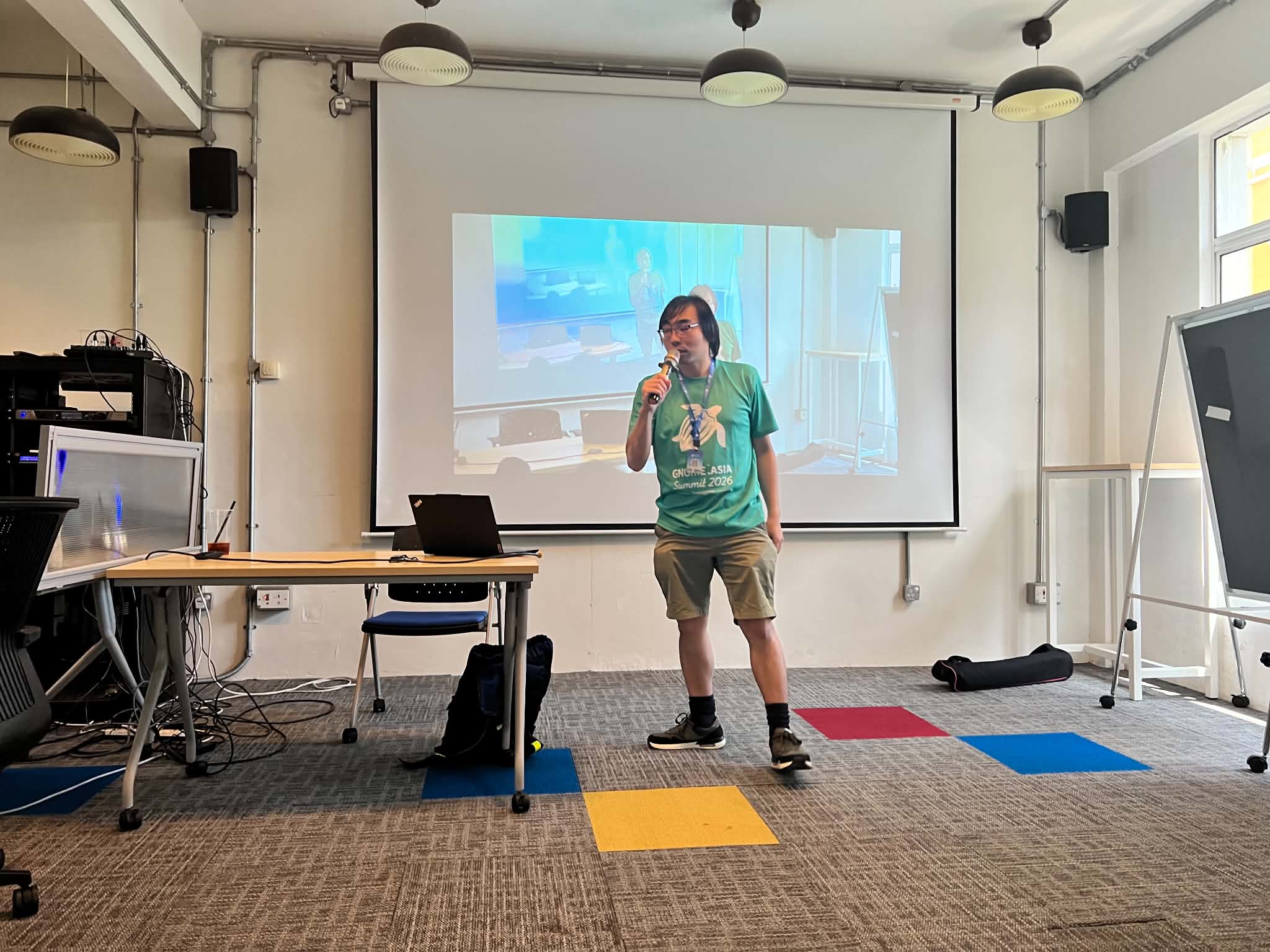
My Presentation: Beyond Pinyin
On 1 November, I presented “Beyond Pinyin: Designing Chinese Input Methods for GNOME — Lessons from libcangjie.”
My presentation focused on the challenges of supporting Chinese input methods in open-source desktop environments.
Chinese text input is not a single, universal problem. Different regions use different input methods, character sets, and typing conventions. In Hong Kong, Cangjie and Quick input methods remain important to many users, yet their needs are not always well understood by developers elsewhere.
Drawing on my experience with libcangjie and the evolution of Chinese input support on Linux, I discussed why localisation requires more than simply translating an interface or adding Pinyin support.
One of my key messages was that global open-source infrastructure and local knowledge must work together. Local communities are often best placed to identify their users' needs, while international collaboration helps turn those needs into sustainable software.
It was a valuable opportunity to bring these issues back into discussion at GNOME.Asia.
Technical Insights: Agentic AI and Tool Isolation
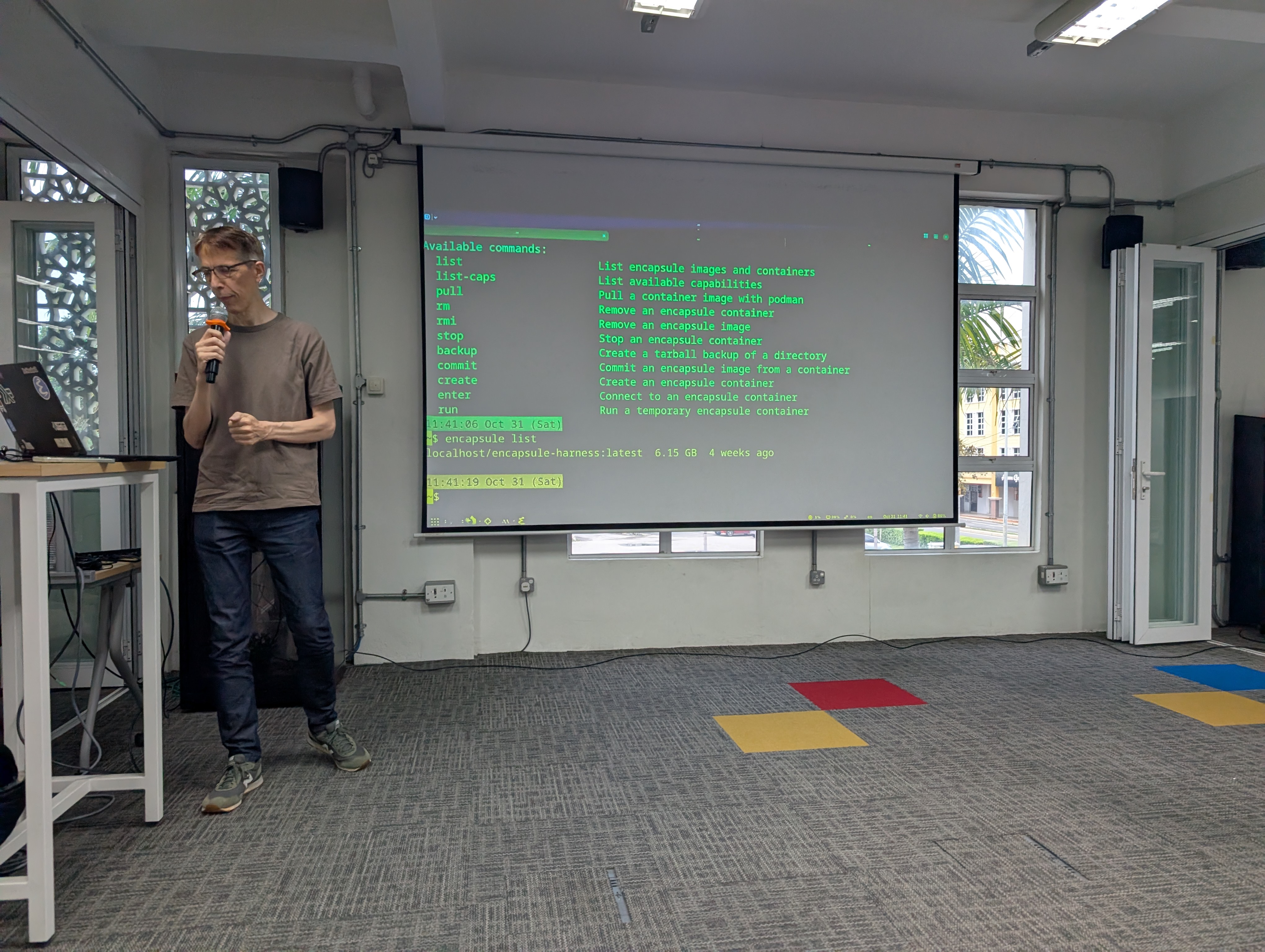
Among the presentations I attended, Jens Petersen's “Isolating tools in the age of agentic development” was particularly useful.
The presentation explored using Linux containers, Podman, and related tooling to isolate development tools and control their access to system resources.
With the growing use of AI coding agents, this has become increasingly relevant. Agents may execute commands, install dependencies, modify files, and interact with external tools.
Even when an AI agent is working towards the correct objective, its individual actions should not automatically be trusted.
I found this presentation especially relevant to my own software development work. Isolation, restricted permissions, and reproducible testing environments are becoming essential parts of responsible agentic development.
I also attended Sammy Fung's presentation, “Open Source Agentic AI Needs Community: How We Build It Together.”
The two talks complemented each other: technical safeguards are important, but so are open collaboration, shared knowledge, and sustainable communities.
Learning from Nepal and Indonesia
Another memorable presentation was “Digital Government in Nepal: Opportunities for Free and Open-Source Software,” delivered remotely by Rajesh Pudasaini.
The talk discussed the practical challenges of digitising government services in environments where reliable electricity, internet connectivity, digital literacy, and access to suitable devices cannot always be assumed.
It reminded me that making a public service available online does not necessarily make it accessible to everyone.
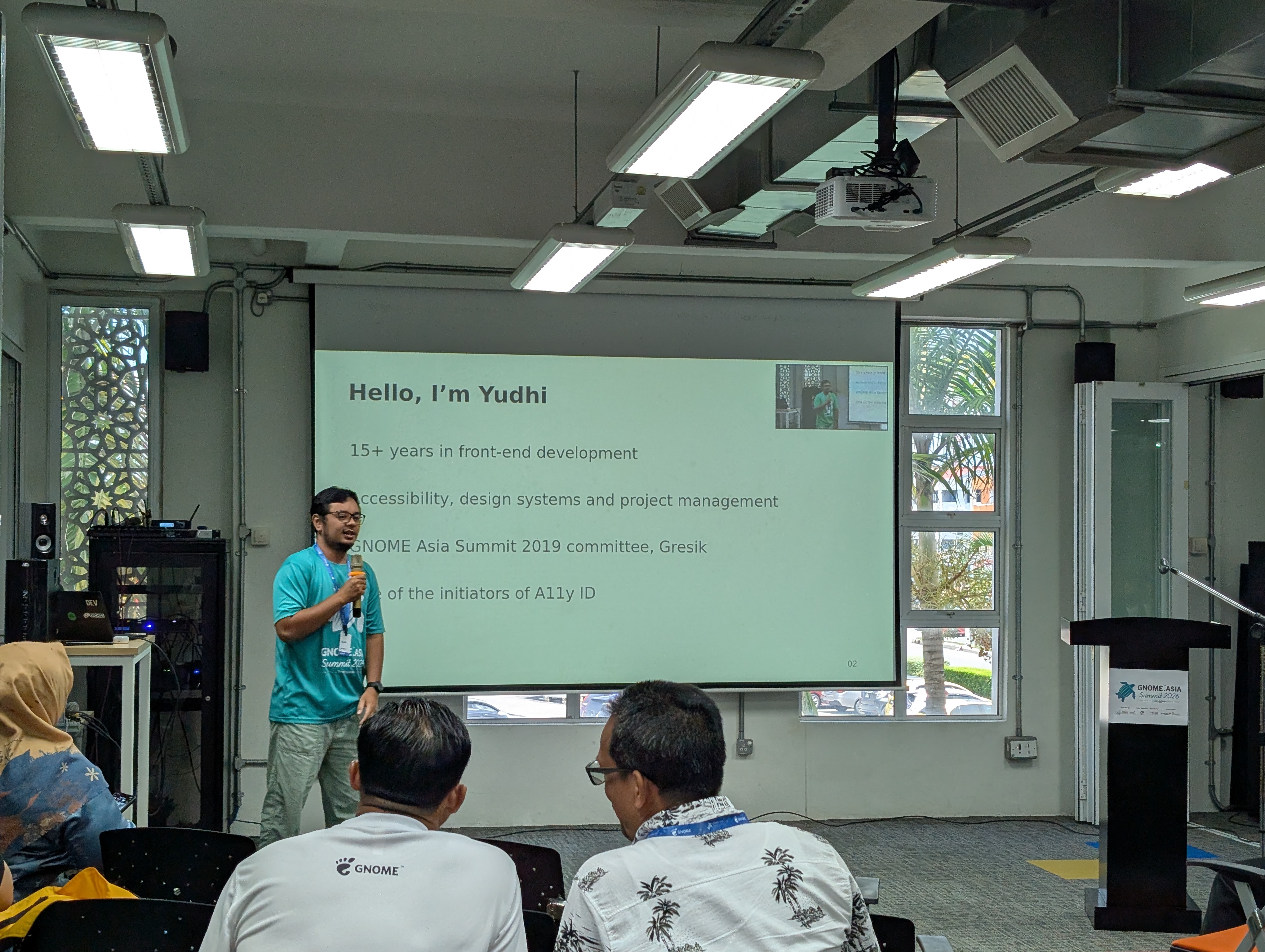
On the second day, I attended Yudhi Satrio's presentation about GNOME's accessibility features. It was a useful reminder that accessibility must be part of software design, rather than an optional addition.
I also enjoyed Herpiko Dwi Aguno's presentation about BlankOn Linux and the development of Indonesia's local open-source community.
As someone who has helped organise open-source activities in Hong Kong for many years, I found the community-building aspect particularly interesting.
Developing software is one challenge. Maintaining a community, attracting new contributors, and passing responsibilities to future generations are equally important.
Conversations Beyond the Conference
One of my favourite moments happened outside the conference venue.
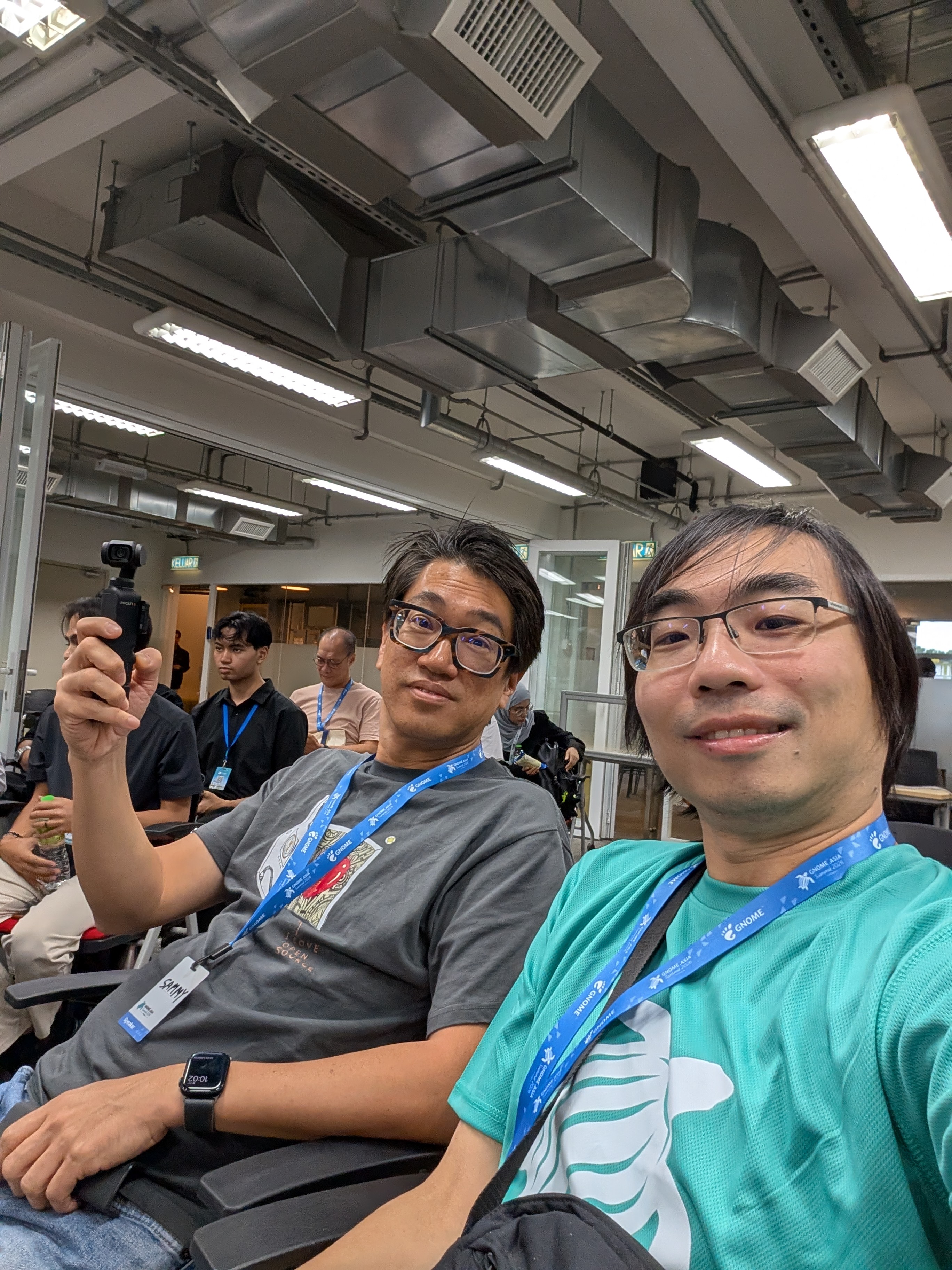
Before leaving Malaysia, I unexpectedly met Sammy and Herpiko at a café in a shopping mall.
We talked about Linux distributions, local communities, and the importance of building software that responds to local needs. Sammy also shared his interest in creating his own Linux distribution.
The conversation connected naturally with my presentation about Chinese input methods.
I believe local communities have an essential role in addressing problems that international software projects may not fully understand.
The same applies to AI technologies, particularly voice AI and language support.
Hong Kong Cantonese has distinct linguistic and cultural characteristics. Commercial AI providers may not always prioritise such local requirements, especially when the potential market is relatively small.
For endangered languages, the challenges can be even greater.
Open-source communities can help preserve linguistic diversity by enabling local participation in developing datasets, evaluating models, and creating language technologies.
However, local communities also face sustainability challenges.
In Hong Kong, many open-source initiatives still depend on a relatively small group of long-standing contributors. Some of us now live in different parts of the world, making community organisation and succession more difficult.
Hearing about Indonesia's experiences reminded me that building sustainable communities is just as important as building software.
What I Took Away
GNOME.Asia Summit 2026 was more than an opportunity to present a technical topic.
It reminded me that open source brings together people working in different environments, with different languages, cultures, and challenges.
The talks on digital government, accessibility, AI development, and local Linux communities all reinforced an important idea:
Technology should not only be available. It should be genuinely usable and meaningful to the people it is intended to serve.
Global collaboration gives us the tools, while local communities help define the problems worth solving.
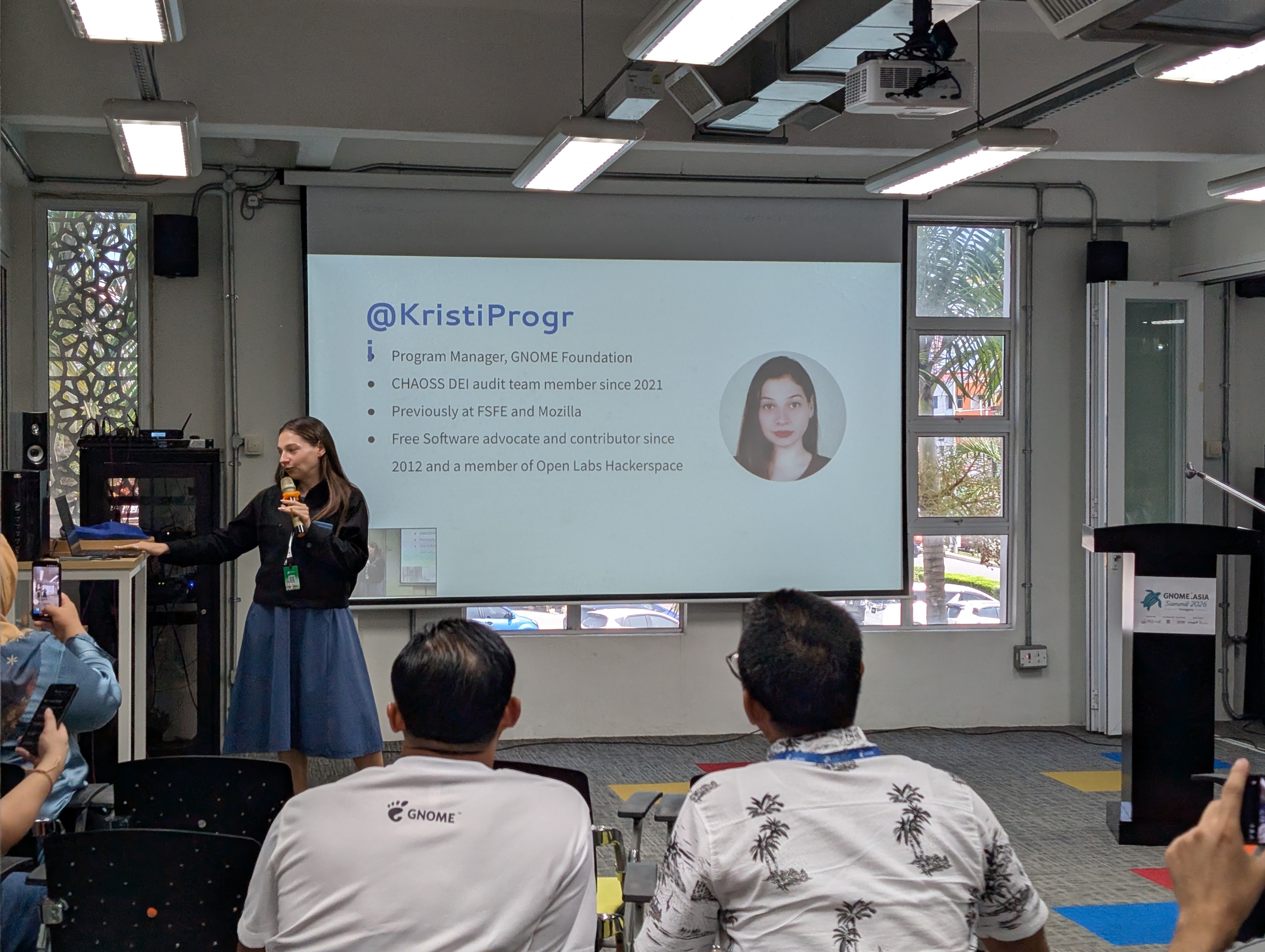
I am grateful to the organisers, volunteers, speakers, and everyone who helped make GNOME.Asia Summit 2026 possible.
I would also like to express my sincere thanks to the GNOME Foundation and its Travel Committee for supporting my travel to Malaysia. Their sponsorship made it easier for me to participate in the conference, share my experience with Chinese input methods, and exchange ideas with open-source contributors from across Asia.
I hope to continue contributing to these conversations and supporting collaboration between local and international open-source communities.
GNOME.Asia Summit 2026: https://events.gnome.org/event/376/
Presentation: Beyond Pinyin: Designing Chinese Input Methods for GNOME — Lessons from libcangjie
Travel sponsorship: This trip was supported by the GNOME Foundation Travel Committee.
